New Hospital. Historic Charity. Millions at Stake. The biggest land deal in the history of Frimley. So Why Are So Many Questions Still Unanswered?
When Frimley Health NHS Foundation Trust announced that land owned by Frimley Fuel Allotments had been selected as the preferred location for a new Frimley Park Hospital, the focus immediately turned to healthcare.
The need for a replacement hospital is widely accepted. Much of the existing hospital contains reinforced autoclaved aerated concrete (RAAC), and few would dispute the importance of providing modern facilities for future generations.
Yet the announcement has also brought something else into sharp focus.
Not the hospital itself, but the charity that owns the land.
Frimley Fuel Allotments is not a commercial developer, a property investment company or a public body. It is a charity. Its land was entrusted to it for charitable purposes and has been managed for generations as a significant community asset.
That distinction matters.
Because once charitable land becomes the preferred site for a major infrastructure project, the questions stop being solely about healthcare and start becoming questions of governance, accountability and public trust.
The trustees have now set out their position in a formal statement welcoming the hospital proposal.
Click to Read FFA Charity Statement
They argue that helping facilitate a new hospital is entirely consistent with the charity’s objectives. They state that all net proceeds from any future land sale would remain within the charity and be used to provide greater support for local charities, community groups and residents experiencing hardship. They further suggest that the project could create wider benefits through improved biodiversity, enhanced woodland stewardship and better walking and cycling connections.
On the surface, it is a positive and optimistic vision.
However, it is also a statement built around a series of important conclusions that beneficiaries have not yet been shown the evidence behind.
The trustees say a sale could generate greater community benefit.
How much greater?
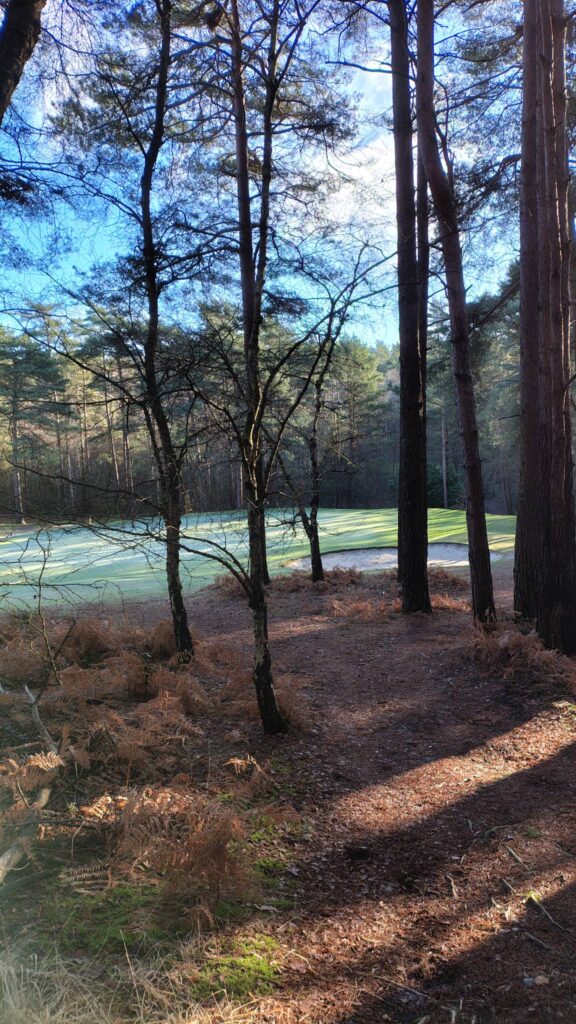
The charity already owns an income-generating asset. The golf course currently provides ongoing revenue to support charitable activities. What financial modelling has been undertaken to demonstrate that selling the land would provide a better outcome than retaining it? Have trustees compared future lease income against investment returns from sale proceeds? What assumptions have been used? What risks have been considered?
The statement does not say.
The trustees also state that helping deliver a hospital is consistent with the charity’s objectives.
Again, that may be correct.
But many beneficiaries may reasonably ask what legal advice has been obtained to support that conclusion and whether the charity has formally considered the implications of disposing of such a significant asset.
Particularly important is the question of whether the land is held as permanent endowment.
If it is, then further questions naturally follow regarding restrictions on sale proceeds, regulatory approvals and the extent to which any disposal genuinely benefits the charity itself rather than simply transferring a valuable asset into another use.
The trustees’ statement does not address those issues.
Nor does it provide details of the valuations, professional reports or governance processes that underpin its conclusions.
Those omissions do not mean anything improper has occurred.
But they do mean that beneficiaries are being asked to accept a number of significant assertions without being given access to the analysis behind them.
At the same time, questions continue to surround the charity’s decision-making process during the period when potential development options were being explored.
One name that has repeatedly surfaced is Michael James Riding, the property professional who held an estate and land management role for Frimley Fuel Allotments until 2025.
Mr Riding’s background is extensive. He has spent decades working in strategic land acquisition and development through organisations including Harrow Estates, Northern Trust and Redrow. During the period when future uses of Frimley Fuel Allotments land were reportedly under discussion, several companies carrying the Frimley name were incorporated under his directorship, including Chilton Frimley Ltd, Frimley Park Village Ltd and Frimley Chilton Ltd.
There is no evidence that any of those companies acquired rights over Frimley Fuel Allotments land or that any wrongdoing occurred.
However, their existence, timing and naming have inevitably generated public interest. Questions remain about their intended purpose, whether they had any connection to discussions concerning the site and how any potential conflicts were identified and managed.
Again, these are not allegations.
They are questions.
And they are questions that become increasingly difficult to dismiss when the land involved has now been identified as the preferred location for a major public project.
The issue facing Frimley Fuel Allotments Chairty is not necessarily whether its decisions were right or wrong.
It is whether the charity can demonstrate that those decisions were reached through a process that would withstand the highest level of scrutiny.
That matters because the Charity Commission does not exist to investigate wrongdoing alone.
Its role is also to ensure that charitable assets are managed appropriately, that trustees act solely in the interests of beneficiaries, that conflicts of interest are properly handled and that major transactions involving charity property are supported by appropriate evidence and professional advice.
To be clear, there is currently no public indication that the Charity Commission is investigating Frimley Fuel Allotments, nor is there evidence of misconduct by the trustees.
But many of the questions now being asked by residents are precisely the kinds of questions that charity regulators routinely expect trustees to be able to answer.
How was best value assessed?
What independent advice was obtained?
How were conflicts managed?
What alternatives were considered?
How were beneficiaries’ interests evaluated?
How was environmental impact weighed against financial benefit?
And perhaps most importantly of all, where is the evidence that supports the conclusions now being presented as fact?
The proposed hospital site represents approximately one fifth of the charity’s landholding. Decisions of that scale do not happen often. They may represent some of the most significant decisions trustees will ever make.
For that reason, transparency should not be viewed as an inconvenience or an obstacle to progress.
It should be viewed as an opportunity.
If the trustees have undertaken the financial modelling, obtained the legal advice, commissioned the valuations and followed the governance procedures that such a decision requires, then publishing that evidence would help answer many of the concerns currently circulating within the community.
The announcement of the preferred hospital site has changed the debate.
The question is no longer whether Frimley Fuel Allotments land might be used for a new hospital.
The question now is whether the charity can demonstrate, openly and convincingly, that such a decision represents the best possible outcome for the beneficiaries it exists to serve.
Until that evidence is available, the questions are unlikely to go away.



Leave a Reply