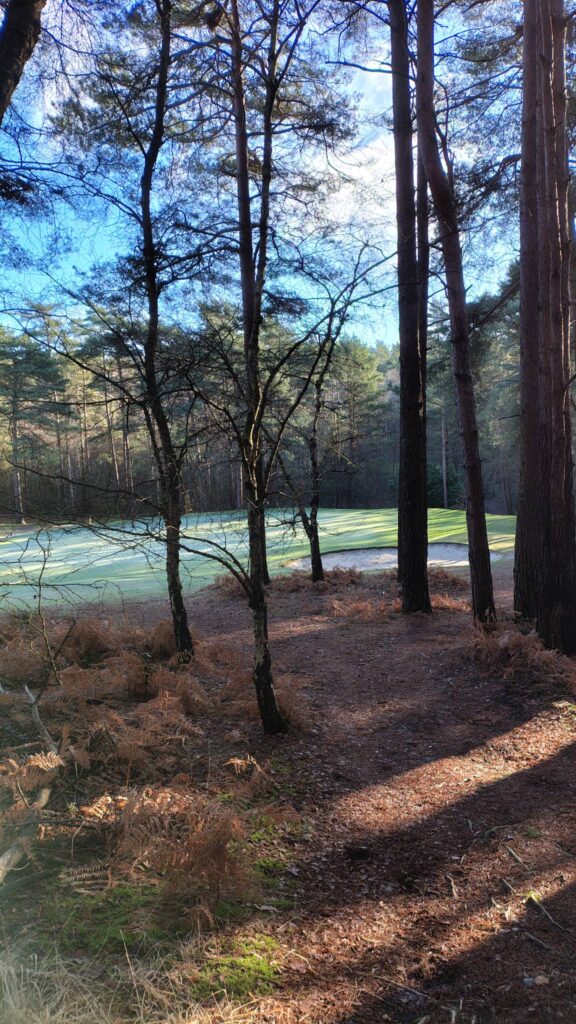
| It would destroy or heavily damage valued local woodland. |
| The land is used by local people for walking, dog walking, running, family time and recreation. |
| The site functions as an important green space in a busy built-up area. |
| It risks damaging wildlife habitats. |
| It risks damaging wildlife corridors. |
| It may affect protected species, depending on surveys. |
| Mature trees cannot be meaningfully replaced by planting saplings elsewhere. |
| Woodland loss would be permanent. |
| Building a hospital on woodland conflicts with the health benefits of access to nature. |
| The proposal removes a public wellbeing asset in the name of healthcare. |
| The development could harm biodiversity. |
| The public has not seen enough ecological evidence. |
| The public has not seen enough tree-loss calculations. |
| The public has not seen enough wildlife survey results. |
| The proposal could conflict with climate and biodiversity objectives. |
| The loss of carbon-storing mature trees matters. |
| The site may require major land clearance. |
| It may permanently urbanise a natural area. |
| A major hospital could open the door to further development on surrounding land. |
| Future hospital expansion could consume even more green space. |
| The site selection process has not been transparent enough. |
| The scoring criteria have not been fully explained to the public. |
| The public has not seen the full site selection matrix. |
| The public has not seen enough evidence explaining why this site beat alternatives. |
| The weighting of transport, ecology, community impact and cost is unclear. |
| It is unclear who assessed and scored the sites. |
| It is unclear what other sites were considered. |
| It is unclear why potentially less damaging sites were rejected. |
| Better brownfield or less environmentally harmful sites may exist. |
| The process appears to many residents to have been run backwards: land first, justification later. |
| A deposit being paid before planning permission raises serious questions. |
| A deposit before full public scrutiny creates the impression of a predetermined outcome. |
| Residents have reportedly heard language such as “when” it is built rather than “if”. |
| Residents have reportedly been told there is “no Plan B”. |
| If there is no Plan B, the consultation may not be a genuine options exercise. |
| The consultation risks looking like mitigation-gathering rather than genuine decision-making. |
| The Trust has not clearly shown how public feedback could change the outcome. |
| Consultation materials have been criticised as vague. |
| The engagement booklet has been criticised as lacking substance. |
| Polished engagement language is not a substitute for evidence. |
| The public needs detailed documents, not broad assurances. |
| The public has not seen enough detail on cost comparisons. |
| The public has not seen enough detail on site constraints. |
| The public has not seen enough detail on road upgrades. |
| The public has not seen enough detail on junction changes. |
| The public has not seen enough detail on parking assumptions. |
| The public has not seen enough detail on construction disruption. |
| The public has not seen enough detail on drainage and flood risk. |
| The public has not seen enough detail on equalities impact. |
| The public has not seen enough detail on patient travel times. |
| The local road network is already constrained. |
| The site is close to multiple schools. |
| School drop-off traffic could clash with hospital traffic. |
| School pick-up traffic could clash with hospital traffic. |
| Emergency access could be compromised by congestion. |
| Ambulance access needs much clearer evidence. |
| It is unclear whether ambulance services were properly consulted before site selection. |
| An A&E hospital needs reliable emergency access at all times. |
| Local roads may have limited realistic widening potential. |
| The hospital could create thousands of additional daily vehicle movements. |
| A reported 2,000-space car park implies a huge traffic burden. |
| Staff travel would add major traffic pressure. |
| Visitor travel would add major traffic pressure. |
| Patient travel would add major traffic pressure. |
| Deliveries, waste vehicles and service vehicles would add further traffic. |
| Shift-change times could clash with school and commuter peaks. |
| Hospital traffic is 24/7, not limited to normal office hours. |
| Road closures or accidents could leave the site vulnerable if access routes are limited. |
| The local road network may lack resilience. |
| The site may not have the strategic road access expected for a major hospital. |
| A hospital should ideally be near strong major-road links and multiple access points. |
| Public transport access may be insufficient. |
| The site could make the hospital car-dependent. |
| A car-dependent hospital weakens sustainability claims. |
| Increased congestion would worsen idling and emissions. |
| More traffic near schools raises child safety concerns. |
| More traffic near schools raises air quality concerns. |
| Children walking or cycling to school could be affected. |
| Residential roads could suffer overspill traffic. |
| Residential roads could suffer overspill parking. |
| Staff parking could spill into nearby streets if underestimated. |
| Visitor parking could spill into nearby streets if underestimated. |
| A major hospital could permanently change the character of nearby residential areas. |
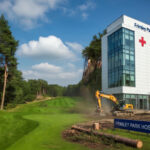
| A 6 or 7-storey hospital would be a major urban-scale structure. |
| An 800-bed hospital would be a very large development. |
| Claims that a large hospital can be “hidden in the woods” need proper visual-impact evidence. |
| A multi-storey hospital would likely be visible despite screening. |
| Large car parks would be difficult to hide. |
| The development may be out of character with the woodland setting. |
| The site’s gradient or hill location could create engineering challenges. |
| The gradient could create accessibility challenges. |
| The gradient could increase construction cost. |
| The site may require expensive new infrastructure. |
| Utilities, drainage and access roads could add significant complexity. |
| Building on a complex greenfield/woodland site may be less efficient than alternatives. |
| Any cost escalation affects public money. |
| The public deserves proof that this is genuinely best value. |
| The current hospital issue is linked heavily to RAAC and estate condition, not simply because the existing hospital has no value. |
| The need for a new hospital does not automatically justify this specific location. |
| Residents are not necessarily opposing a new hospital. |
| The stronger campaign position is: “Yes to a new hospital, no to the wrong site.” |
| The clinical need for a hospital should not be used to silence planning objections. |
| The proposal could damage trust in Frimley Health. |
| The proposal could damage trust in Frimley Fuel Allotments. |
| The role of Frimley Fuel Allotments as a charity needs closer scrutiny. |
| The charity’s objects and duties need to be clearly explained. |
| The public should know whether trustees properly considered community detriment. |
| The public should know whether trustees properly considered alternatives to disposal. |
| The public should know whether trustees obtained proper value. |
| The public should know whether conflicts of interest were declared. |
| The public should know whether trustee minutes can be published. |
| The public should know the terms of the deposit as far as legally possible. |
| The public should know what happens to the deposit if planning fails. |
| The deposit may create pressure to push the scheme forward. |
| The land may be being moved away from its original community purpose. |
| Frimley Fuel Allotments’ replies have been perceived as not answering key questions. |
| Lack of direct answers increases public suspicion. |
| The Charity Commission may need to be asked to consider governance or transparency issues. |
| The petition reportedly has around 14,000 signatures. |
| Ignoring a petition of that scale would look dismissive. |
| The level of public opposition suggests the proposal lacks social licence. |
| A large public response should trigger deeper engagement. |
| The campaign has shown strong local concern online and offline. |
| Social media attention suggests this is not a fringe objection. |
| A short traffic-related video reportedly gaining over 100k TikTok views shows the issue resonates. |
| Local anger appears to be growing rather than fading. |
| The Trust risks appearing arrogant if it brushes aside objections. |
| The Trust needs to be seen to answer questions directly. |
| The Trust needs to explain why other sites are worse. |
| The Trust needs to publish the full evidence base. |
| Senior leadership has not yet publicly resolved many of the key concerns. |
| Political representatives have raised questions, showing wider public-interest concern. |
| A response from Trust leadership to political questioning was previously still pending in the campaign material. |
| A highly contested site could cause years of objection. |
| A highly contested site could cause planning delay. |
| A highly contested site could create legal challenge risk. |
| Choosing the wrong site could delay the hospital replacement rather than speed it up. |
| A less controversial site may provide a more deliverable route. |
| The urgency caused by RAAC should not justify a poor long-term decision. |
| Once the woodland is gone, it cannot be brought back. |
| Planning-policy objections may arise around loss of green space. |
| Planning-policy objections may arise around highways safety. |
| Planning-policy objections may arise around sustainable transport. |
| Planning-policy objections may arise around biodiversity net gain. |
| Planning-policy objections may arise around landscape impact. |
| Planning-policy objections may arise around air quality. |
| Planning-policy objections may arise around noise pollution. |
| Planning-policy objections may arise around light pollution. |
| Planning-policy objections may arise around construction impact. |
| Planning-policy objections may arise around flood risk or drainage. |
| Legal/process concerns may arise if consultation is not genuine. |
| Legal/process concerns may arise if the outcome appears predetermined. |
| Legal/process concerns may arise if alternative sites were not properly assessed. |
| Legal/process concerns may arise if environmental assessment is inadequate. |
| Legal/process concerns may arise if traffic modelling is flawed. |
| Legal/process concerns may arise if equalities duties are not properly addressed. |
| Legal/process concerns may arise if charity governance is weak. |
| The hospital’s 24/7 lighting could disrupt wildlife. |
| The hospital’s 24/7 lighting could affect nearby residents. |
| Sirens, deliveries and service activity could alter the area permanently. |
| Construction could bring years of noise, dust and disruption. |
| Construction traffic near schools creates safety concerns. |
| Construction traffic near homes creates amenity concerns. |
| Construction could damage areas beyond the direct building footprint. |
| “Mitigation” may not be enough to offset the core harm. |
| The public has not been given enough confidence that mitigation would be enforceable. |
| There is a risk of creeping expansion after initial approval. |
| There is a risk that the site boundary or building position changes later. |
| Campaigners have speculated that the awkward hill location may later be used to justify moving the footprint closer to flatter land. |
| The public should challenge any attempt to use one poor option to justify another nearby option. |
| A major hospital is a once-in-generations decision. |
| A wrong site choice would create consequences for decades. |
| The burden of proof should sit with the Trust and landowners, not residents. |
| Until evidence is published, the public cannot properly judge the proposal. |
| A decision of this scale should not proceed on broad assurances alone. |
| The proposal risks sacrificing woodland, amenity, wildlife and road safety without sufficient justification. |
| The Trust should pause if it cannot prove this is the best site. |
| The Trust should reassess alternatives if evidence does not clearly support the site. |
| The community deserves full transparency before any planning application progresses. |
| The simplest objection remains: the new hospital is needed, but Frimley Fuel Allotment land appears to be the wrong place for it. |
Leave a Reply