
Fallen Wood in Frimley Fuel Allotments Pond Raises Environmental Concerns
Conservation volunteers and local residents have raised concerns after fallen branches and timber were found dumped into a pond at Frimley Fuel Allotments, mirroring problems recently highlighted at other protected commons across the country.
While often done with good intentions, environmental experts warn that throwing wood into ponds can cause long-term ecological harm, undermining habitat restoration efforts and reducing water quality.
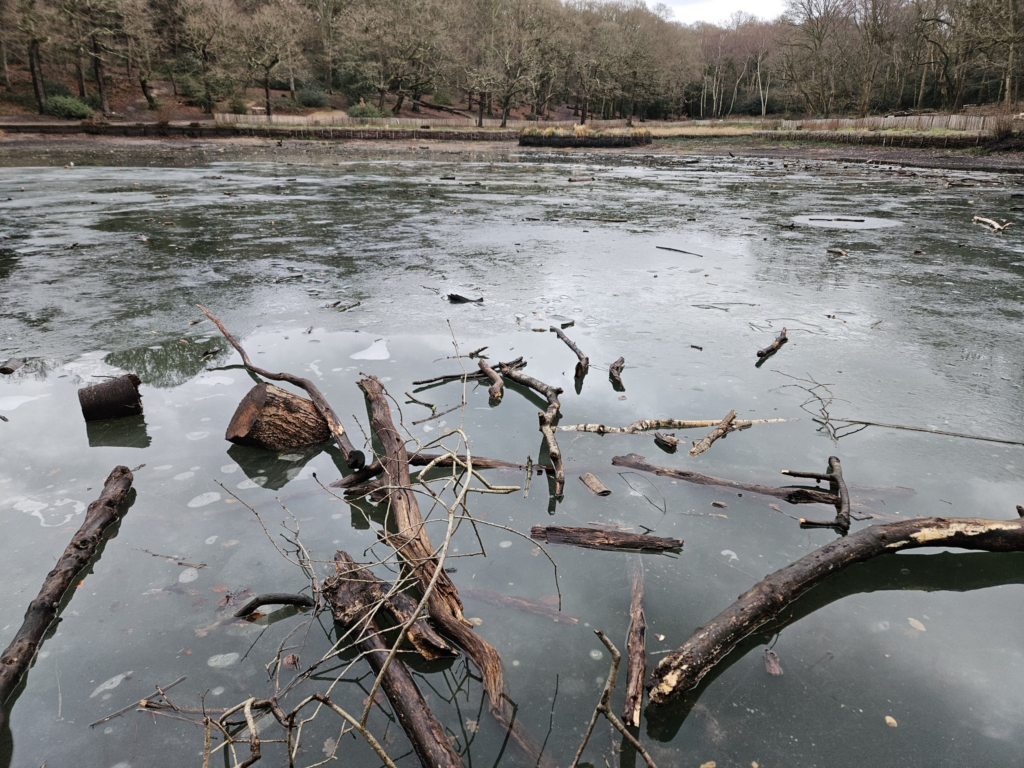
Why dumping wood causes damage
When branches and logs are placed into ponds, they gradually rot, releasing nutrients into the water. This accelerates silt build-up and eutrophication, leading to poorer oxygen levels and reduced biodiversity.
Over time, this can:
- Reverse pond restoration work
- Smother aquatic plants
- Harm insects, amphibians and fish
- Reduce the pond’s value for birds and mammals
In sensitive woodland ponds such as those at FFA, even small changes to water chemistry can have outsized impacts.
Woodland floors matter too
Ecologists stress that fallen branches should be left where they fall on woodland floors, not moved into water. Dead wood on land is a vital habitat in its own right, supporting fungi, insects, small mammals and soil health.
Removing it from woodland areas and placing it into ponds disrupts two ecosystems at once — degrading both terrestrial and aquatic habitats.
A wider pattern on protected land
The issue has been seen on other managed commons, where land managers have had to ask the public not to throw wood into ponds following costly desilting and habitat restoration works.
In those cases, restoration efforts were set back as organic matter reintroduced nutrients and silt that had only recently been removed.
Local campaigners say the same risks now apply at Frimley Fuel Allotments, where ponds form part of a wider mosaic of woodland, heathland and wetland habitats.
A reminder as scrutiny grows
The incident comes at a time when Frimley Fuel Allotments is already under increased scrutiny due to potential development pressures. Campaigners argue that everyday stewardship — how the land is treated and managed — highlights its active environmental value, not just its appearance.
They stress that ponds and wetlands are not decorative features but working ecosystems that require careful protection.
What residents are being asked to do
Those familiar with the site are urging visitors to:
- Leave fallen branches where they are
- Avoid placing wood, soil or debris into ponds
- Report significant dumping to land managers
- Help protect sensitive habitats for wildlife and future generations
As one local resident put it: “People mean well, but nature doesn’t need tidying. It needs space and understanding.”
With Frimley Fuel Allotments valued as one of the area’s last large natural spaces, residents say small actions — and small mistakes — can make a big difference.



Leave a Reply