
Airspace Restrictions Clarified as Hospital Relocation Questions Continue
Questions around air access and flight restrictions near proposed hospital sites in the Frimley, Deepcut and Bisley area have prompted renewed discussion about how airspace is managed — and what it would realistically mean for a new hospital.
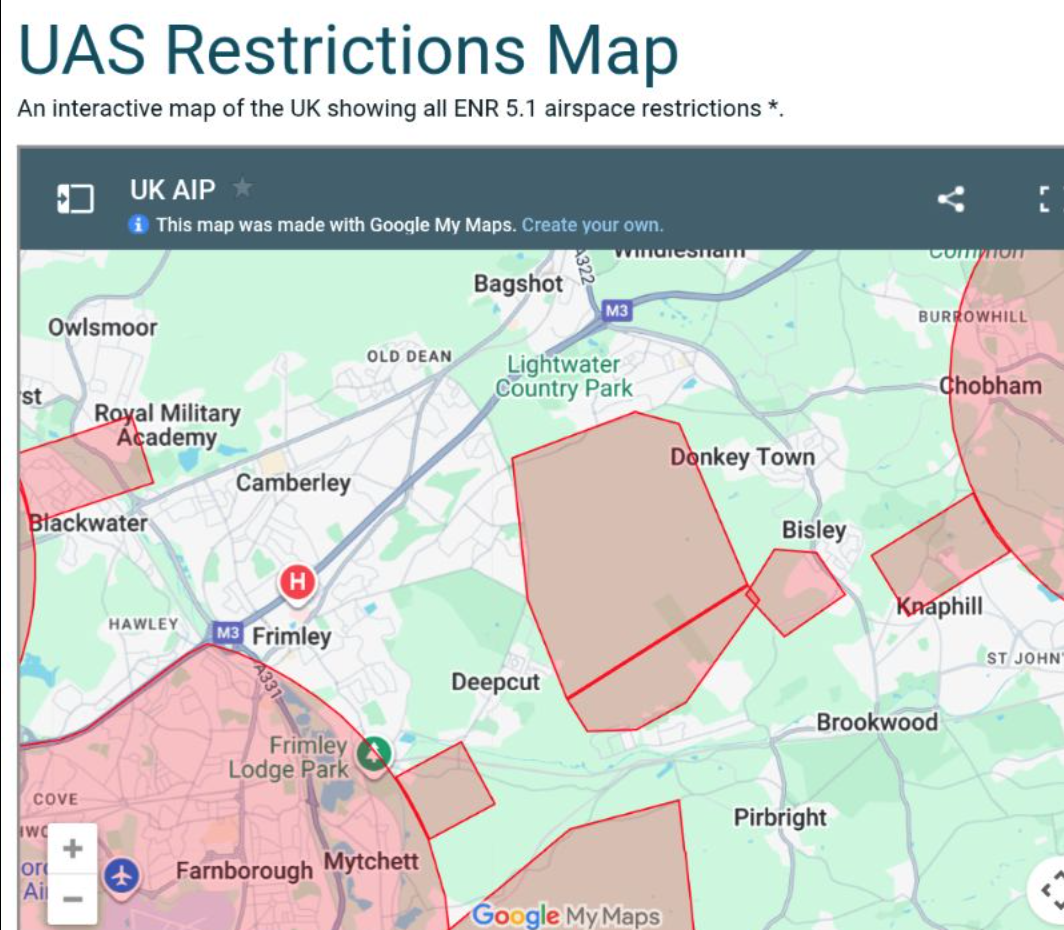
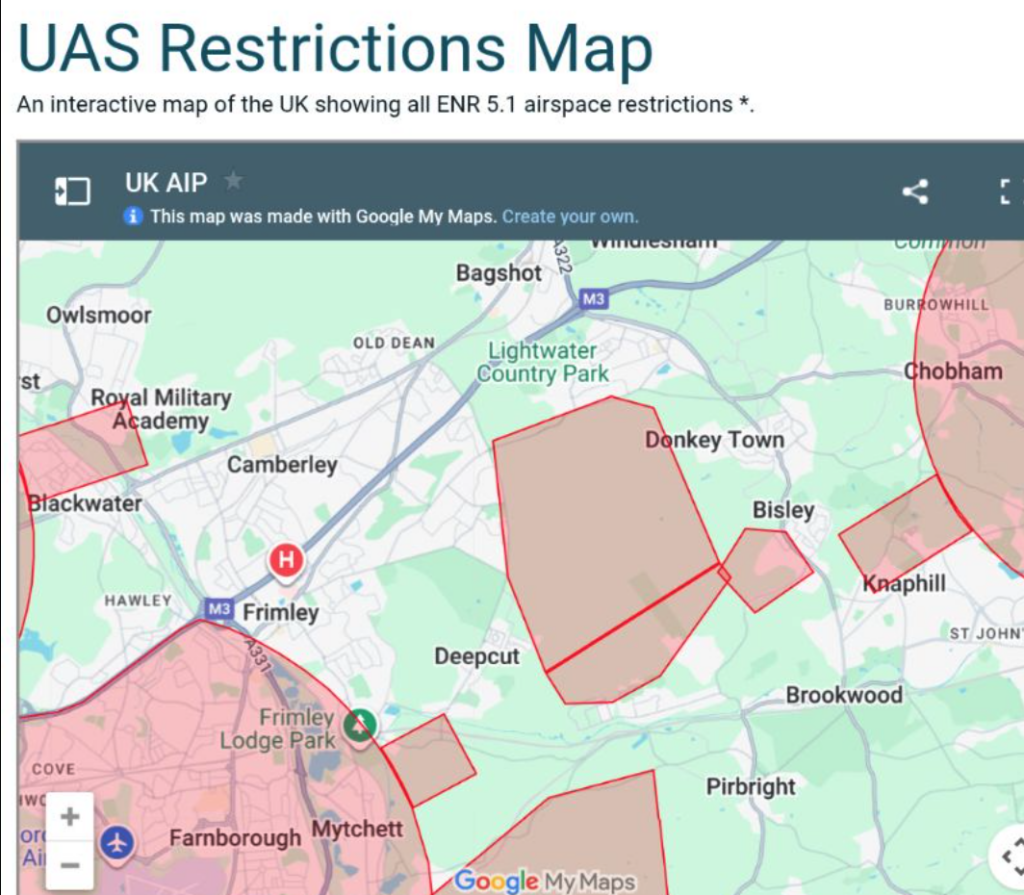
Recent analysis of UK airspace maps shows that the area is subject to a complex but well-established pattern of restrictions, largely linked to Ministry of Defence (MoD) training areas and nearby civilian airports, rather than any blanket prohibition on emergency aviation.
Why the airspace is restricted
Large parts of the airspace around Deepcut, Pirbright and Bisley fall under controlled or restricted zones due to:
- MoD training ranges and live-firing areas
- Proximity to Farnborough Airport
- Nearby civilian airfields including Blackbushe Airport and Fairoaks
- Air traffic control (ATC) corridors designed to manage dense regional traffic
These restrictions are primarily designed to regulate who must seek clearance, rather than to prohibit flight entirely. Aircraft operating in these zones are required to coordinate with the relevant air traffic controllers or range authorities before entering the airspace.
What this means for hospitals and air ambulances
A key clarification is that air ambulances and emergency helicopters operate under different rules from recreational drones or private aircraft.
Emergency medical flights:
- Are routinely granted priority clearance
- Can operate within controlled or restricted airspace
- Are coordinated directly through the Civic Aviation Authority and local ATC
- Regularly fly in and out of complex airspace across the UK, including urban and military-adjacent areas
Frimley Park Hospital already operates a helipad, and medical helicopter access is currently managed safely within the same wider airspace environment.
Aviation specialists note that while restricted areas may add coordination steps, they do not prevent emergency access, nor do they represent an unusual constraint for hospital operations.
Military land and safety considerations
Some public concern has also centred on historic incidents linked to nearby MoD ranges. While past safety incidents are documented — particularly from the latter part of the 20th century — experts are clear that modern range safety protocols, airspace management and ground controls are significantly more stringent.
Unexploded ordnance, where it exists, is confined to tightly controlled and fenced areas. Aviation authorities emphasise that these factors are already fully integrated into existing airspace and flight-safety planning.
Context for hospital planning
From a planning perspective, the presence of controlled airspace is not in itself a disqualifying factor for a hospital site. However, it does underline the importance of:
- Early and transparent engagement with aviation authorities
- Clear publication of helipad design, flight paths and operating assumptions
- Evidence-based assessment of how emergency access would function day-to-day
Campaigners argue that, as with roads and utilities, air access should be assessed openly, rather than assumed to be straightforward or dismissed as a non-issue.
A broader issue of clarity
Much of the recent debate reflects a wider frustration about the lack of detailed, publicly available plans for the proposed new hospital. Without published layouts, infrastructure diagrams or operational models, residents say they are left to speculate about issues that should already be clearly resolved.
As scrutiny of the hospital relocation continues, airspace management has become another example of why communities are calling for greater transparency, clearer evidence, and fewer assumptions in decisions of long-term significance.
What remains clear is that emergency aviation can and does operate safely in complex environments — but whether proposed hospital sites have been fully assessed against those realities is a question many believe still needs answering.

Leave a Reply