
What Recent Council Meetings Really Mean for Frimley Fuel Allotments
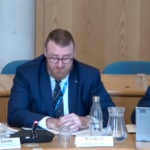
Over the past two council meetings — in December and again on 13 January — Surrey Heath Borough Council discussed a range of issues that directly affect the future of Frimley Fuel Allotments (FFA), even when the land itself was not always the headline topic.
Taken together, these meetings provide the clearest public picture so far of:
- how the council currently views FFA,
- what protections exist,
- what risks remain,
- and why decisions taken elsewhere (national policy and infrastructure) still matter locally.
This article sets out the key points in plain, accessible terms.
1. Clear confirmation: FFA is not allocated for housing
In the December meeting, the council formally confirmed that Frimley Fuel Allotments is not allocated for housing in the Surrey Heath Local Plan.
Councillors stated that:
- the land is not part of the borough’s housing supply,
- it is not required to meet housing targets,
- and Surrey Heath can meet its housing needs without using FFA, including the required buffer.
This is an important clarification for residents. Claims that the land is “needed for housing” are not supported by the council’s own position.
2. However, future planning pressure was openly acknowledged
At the same time, councillors were careful not to overstate this reassurance.
They acknowledged that:
- FFA has been submitted as an “omission site” by a site promoter, meaning it can still be put forward for consideration outside the Local Plan
- any landowner can submit a planning application, even on constrained land
- proposed changes to national planning rules could make it harder for councils to refuse large developments, with some decisions potentially taken at national level
The message was measured but clear:
the land is protected for now, but future risk cannot be ruled out.
3. The land already has unusually strong protections
One of the most significant parts of the December discussion was the council’s own list of constraints affecting Frimley Fuel Allotments.
Councillors confirmed that the land is:
- designated as Countryside Beyond the Green Belt
- covered by extensive Tree Preservation Orders
- partly within the Thames Basin Heaths Special Protection Area, including a 400-metre exclusion zone that effectively blocks residential development
- a Site of Nature Conservation Interest
- identified as Priority Habitat and within a Biodiversity Opportunity Area
- crossed by a high-pressure fuel pipeline
- further constrained by highways, flooding risk, air quality limits, and wastewater capacity
Taken together, these designations strongly support the view that FFA is environmentally, legally, and practically unsuitable for major development.
4. Limits on what the council can do next
Despite recognising the importance of the land, the council explained that the Local Plan is now at an advanced stage and that it is not realistic to add further site-specific protections through that process.
This matters because it means:
- future protection is unlikely to come from new planning designations
- responsibility increasingly shifts to governance, stewardship, and decision-making outside the Local Plan
In simple terms, planning alone may not be enough to safeguard the land long-term.
5. Governance and transparency came into focus
During the December meeting, several councillors declared current or past links to Frimley Fuel Allotments, including trustee roles.
Questions were raised publicly about:
- governance arrangements,
- potential conflicts of interest,
- and whether any non-disclosure agreements exist.
The fact that these questions arose in open session highlights why clarity and transparency around the management of FFA are so important, particularly given the scale and public value of the land.
6. January meeting: water supply and infrastructure pressures
The January meeting focused on water supply and long-term infrastructure, with detailed evidence presented by Affinity Water.
Although Frimley Fuel Allotments was not the main agenda item, the discussion has direct relevance to land-use decisions across Surrey Heath.
Key points included:
- Surrey Heath is officially classed as a water-stressed area
- demand can rise by up to 40% in hot weather
- there is no spare local water capacity
- new water supply solutions are national-scale projects with lead times of 15–20 years
- leakage reduction and smart meters help, but do not offset growth-driven demand
The clear message was that infrastructure is already under pressure and that demand reduction, not expansion, is the direction of travel.
7. Why saying “infrastructure can cope” is misleading
A recurring assumption in planning debates is that infrastructure issues can be “fixed later”. The January session directly challenged that idea.
Councillors were told that:
- water abstraction is tightly capped for environmental reasons
- new supply cannot be created locally
- resilience planning is about managing shortages, not enabling growth
This matters because large developments create pressure long before major infrastructure solutions can realistically be delivered.
8. Why this matters for Frimley Fuel Allotments
Across both meetings, a consistent theme emerged:
- land like FFA is not just open space, but part of the area’s environmental resilience
- once lost, that resilience cannot easily be replaced
- future risks come as much from national policy and infrastructure constraints as from local planning decisions
While FFA is not currently allocated for development, the discussions showed why ongoing vigilance, transparency, and responsible stewardship remain essential.
The overall takeaway for the community
From both council meetings combined, the position is clear:
- Frimley Fuel Allotments is not allocated for housing
- it has exceptional environmental and legal protections
- the council accepts that future pressure cannot be ruled out
- infrastructure limits, especially water supply, make large-scale development increasingly unrealistic
- long-term protection depends on good governance and public accountability
We will continue to publish clear, evidence-based updates so residents can stay informed and engaged as this situation develops.


Leave a Reply