Deposit Paid, Questions Dodged, Trustees Missing: Frimley Hospital Consultation Under Fire
The first public consultation meetings on the proposed new Frimley Park Hospital site appear to have done little to reassure local residents. Instead, early reports from attendees suggest a process that feels underprepared, incomplete and worryingly one-sided.
Residents who attended the Old Dean consultation meeting described significant pushback from the room, with organisers reportedly having to abandon their planned round-table format because so many people had questions. That alone should tell Frimley Health something important: this is not a minor local objection, nor a routine planning concern. This is a community asking whether the decision has already been made before the public has been properly heard.
One of the most striking comments reported from the meeting was that representatives said they were “not asking whether this should be a yes or no decision” but were instead asking what residents’ concerns were so they could be addressed.
For many people, that statement cuts to the heart of the problem. A consultation that does not appear to be asking whether the preferred site is acceptable risks looking less like a genuine consultation and more like an exercise in mitigation. In other words, the public is not being asked whether this is the right site. They are being asked how the impact of that site might be managed.
That is a very different thing.
Residents were also told that the Trust has already placed a deposit on the land. The explanation reportedly given was that this was necessary in order to carry out surveys and due diligence. But politically and publicly, this looks deeply problematic. If public money has already been committed before the public has had a meaningful say, it naturally reinforces the suspicion that the preferred site is already being treated as a done deal.
Local MP Al Pinkerton, responding to one resident’s update, said he had not been aware that a deposit had been paid. He added that he had feared that by the time the preferred site became public, it might already be too late to do anything about it.
That should concern everyone, regardless of whether they support or oppose the proposal. Public confidence depends on openness, timing and trust. At present, all three appear to be under strain.
The Trust reportedly told residents that the Frimley Fuel Allotments site is the only viable option. Several alternative sites were discussed, including Johnson Wax, the existing hospital site, the MOD Cadet site, sites with existing businesses, land at the top of Pine Ridge, and land behind Farnborough Airport.
However, the reasons for rejecting these alternatives appear to have been explained verbally at the meeting rather than published in full before the consultation began. Residents were told that more information about why other sites had been ruled out may be published within the next four weeks.
That is not good enough.
If the public is being asked to respond to a preferred site, the full options appraisal, scoring matrix, transport evidence, land constraints, environmental assumptions and decision-making record should have been available from day one. People cannot properly scrutinise a decision when the evidence behind it is missing, delayed, summarised verbally or only partly explained in a public meeting.
This is especially important because several of the explanations reportedly given have already raised further questions.
Residents have questioned why the current hospital site was dismissed on the basis that redevelopment could require a building over 50 metres tall. Others have asked whether the council was formally approached on this point or whether assumptions were made about what would or would not be approved.
The MOD Cadet site explanation also appears to have left confusion. Attendees reported uncertainty over how much land was actually available after restrictions such as listed buildings, gardens, ponds and flood risk were taken into account. Some reports suggested less than 20 acres, while others later clarified it may have been even less. The fact that residents are having to piece this together from memory after a meeting is itself part of the problem.
There are also serious questions around the claimed need for a 40 to 50 acre site. Residents have asked why a new 800-bed hospital requires substantially more land than the current hospital site, and whether alternative design models, phased redevelopment, shared-site options or split-service models have been fully explored.
One resident asked whether the hospital could be split across several sites. That is exactly the kind of question that deserves a clear public answer, not a vague dismissal.
Traffic and infrastructure remain among the biggest concerns. The current plan is reportedly for construction between around 2029 and 2033, meaning years of heavy construction traffic and disruption. Residents are especially worried about already pressured local roads, the safety of schoolchildren, and the loss of woodland routes currently used by children and families to avoid busy roads.
The Trust reportedly confirmed that the traffic survey will take place during school term time. That is welcome, but it does not answer the bigger issue: whether the surrounding road network is remotely suitable for a major new hospital, its staff, patients, visitors, emergency access, delivery vehicles and years of construction traffic.
There are reportedly two proposed access points, one near The Riding and another near the old Bisley roundabout by Edgware Road. For many residents, that only sharpens the concern. These are not abstract lines on a map. These are real roads, used daily by families, schoolchildren, commuters, cyclists and dog walkers.
Environmental questions also remain unresolved. An environmental impact assessment is expected to be undertaken in the new year, but residents are being asked to engage with the preferred site now. That sequencing feels backwards. How can the public judge the suitability of a woodland site before the environmental evidence is available?
Perhaps most glaringly, residents asked for representatives from the Frimley Fuel Allotments charity trustees to attend every consultation meeting. That request is entirely reasonable.
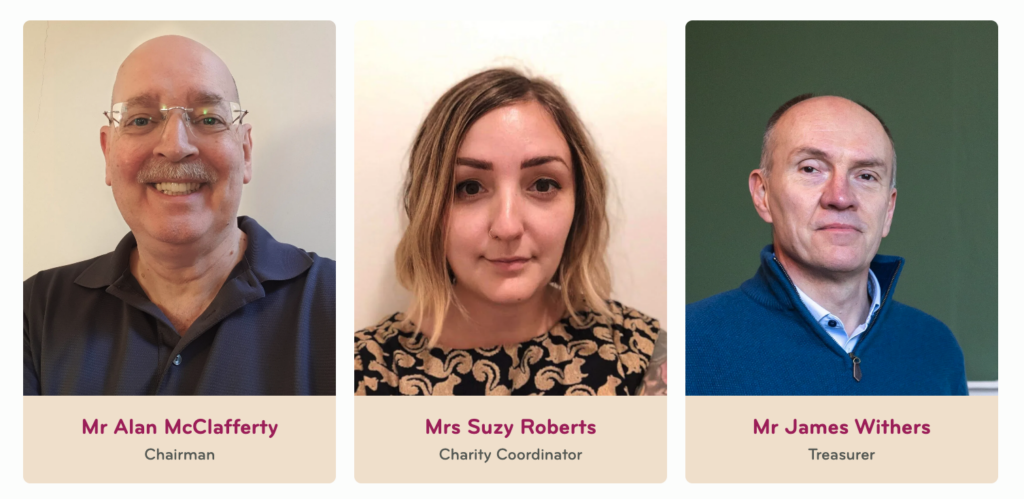
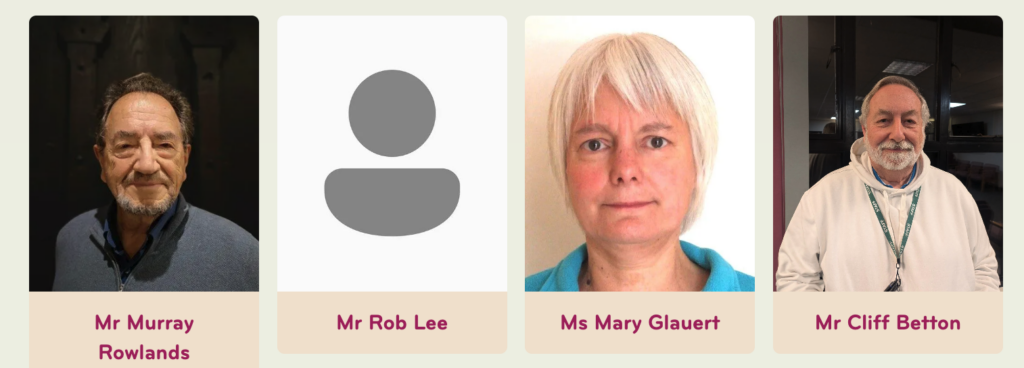
Members of the FFA charity were notoriously absent for the first consultation meeting at th Old Dean on 20th June 2026.
If charity land is central to this proposal, and if the sale or development of that land could permanently change the character of the area, then the trustees should be present, visible and accountable. Their absence from these meetings, if continued, would be unacceptable.
Residents are not only concerned about the hospital itself. Many fear this could be the start of wider development in the area. Those fears may or may not prove correct, but they cannot be brushed aside. The trustees have a duty to be transparent about the charity’s role, the land discussions, the financial implications, any restrictions attached to the land, and how the charity’s public benefit obligations are being considered.
A consultation about this site cannot be credible if one of the key landholding bodies is not in the room.
The wider feeling from residents is clear. They are not opposing a new hospital. Many accept that Frimley Park Hospital has serious structural challenges, including RAAC-related issues, and that a modern replacement may be needed. But needing a new hospital does not automatically justify choosing this site.
The public position is more reasonable than officials may wish to admit: build the hospital, but prove that this is the right place for it.
That means publishing the full evidence now. Not in four weeks. Not after more consultation events have already taken place. Now.
At minimum, the public should be given:
- The full site options appraisal.
- The scoring matrix used to assess all sites.
- The reasons each alternative site was rejected.
- The land agreement and deposit details.
- The transport and access assumptions.
- The environmental constraints and survey timetable.
- The record of who made the preferred-site decision and when.
- The role of Frimley Fuel Allotments trustees in the process.
- The answer to what happens if public opposition remains overwhelming.
Until that information is published, residents are being asked to comment without the evidence they need. That is not meaningful engagement. It is managed communication.
The Trust has reportedly invited people to suggest alternative sites of around 40 to 50 acres, available for sale and with suitable transport connections. Residents should take them up on that invitation. But the burden should not sit with the public to reverse-engineer a better process after the preferred site has already been announced.
If the Trust wants public confidence, it needs to stop treating transparency as something to be provided later. It needs to show its workings, explain its assumptions, bring the charity trustees into the room, and answer direct questions directly.
Right now, the consultation appears to be creating more doubt than confidence.
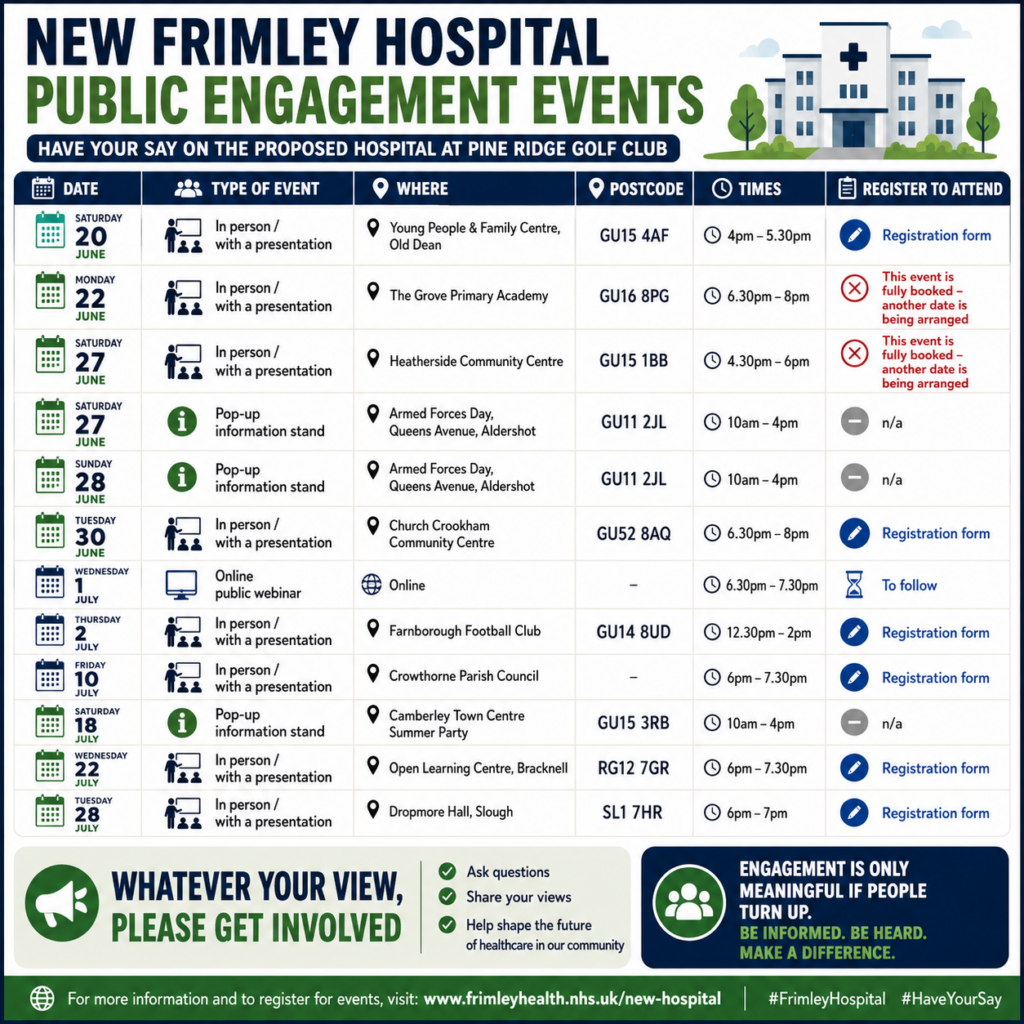
And unless that changes quickly, the suspicion that this decision has already been made will only grow stronger. Make sure you get along to one of the events to have your say.

Leave a Reply