New SANG Proposal in Frimley and Deepcut: Protection or Planning Trojan Horse?
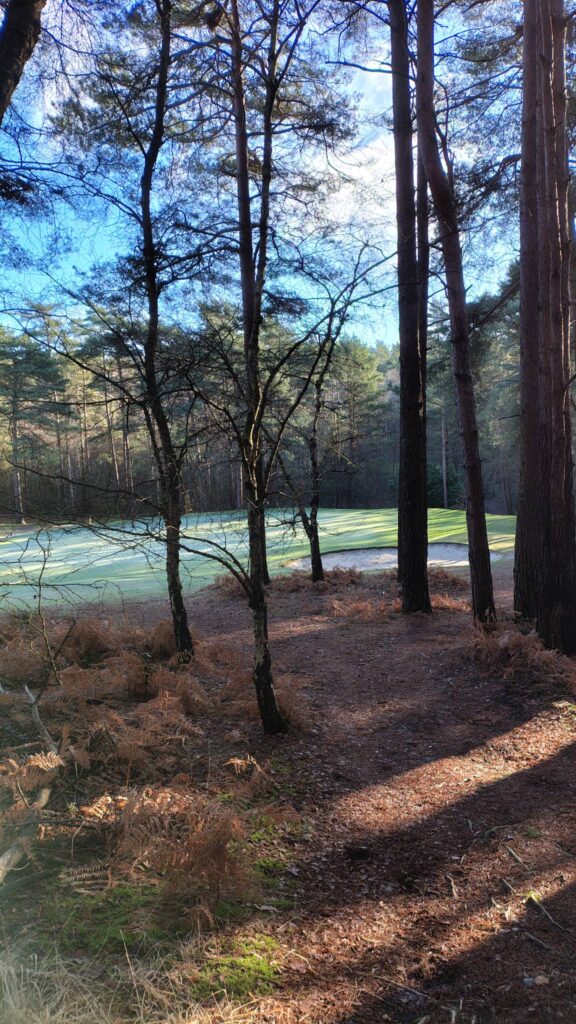
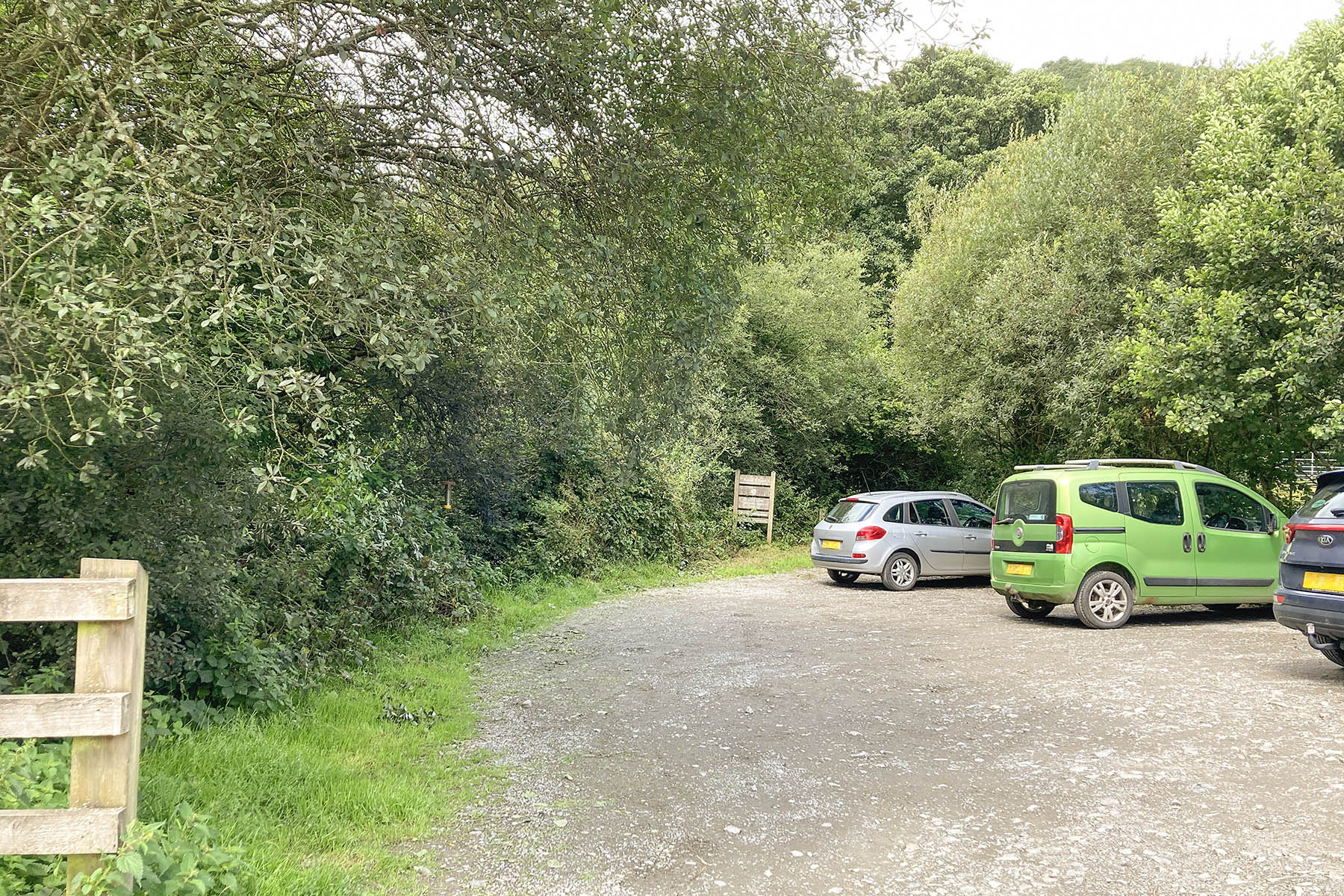
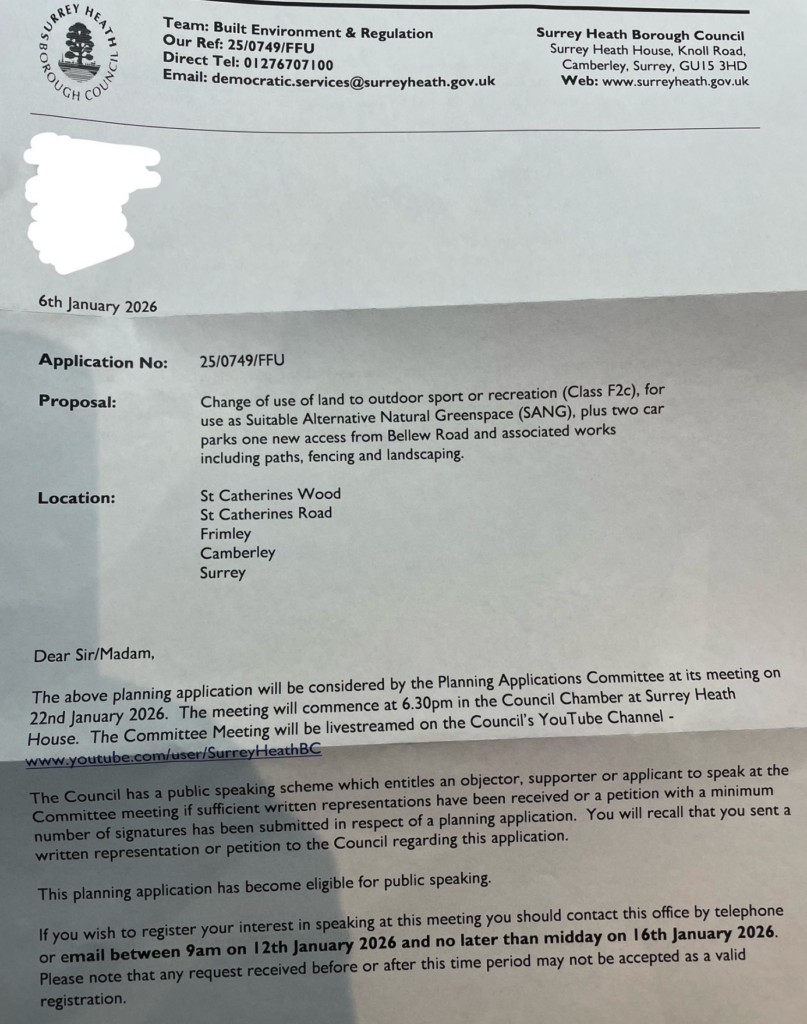
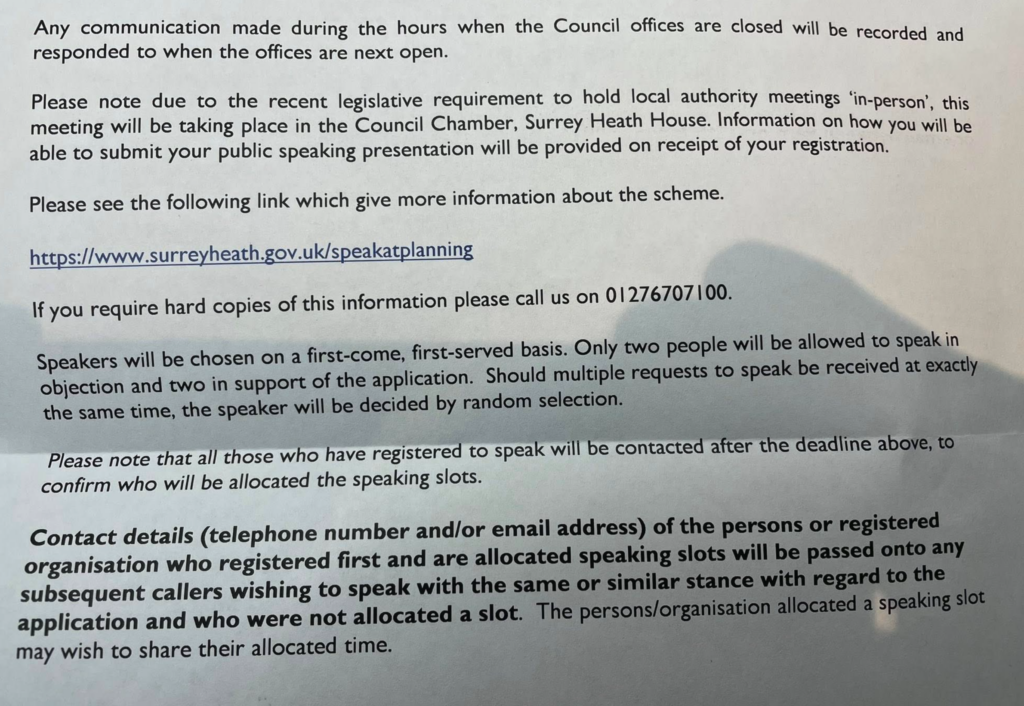
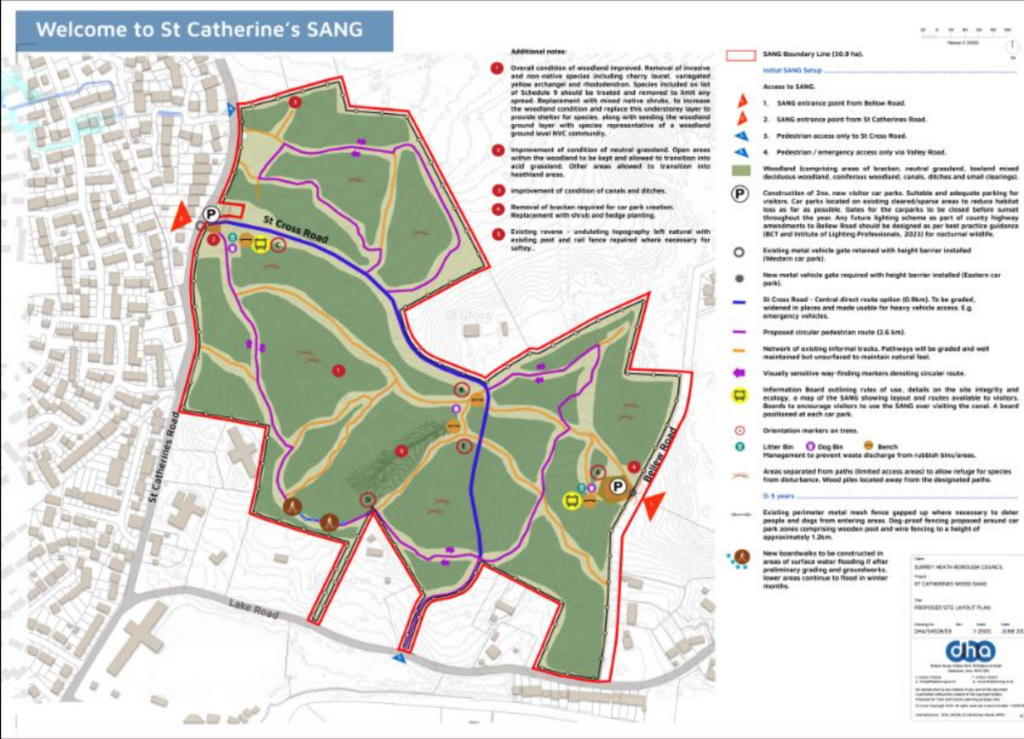
Residents in Frimley and Deepcut face a planning issue with wide implications for local green space. Surrey Heath Borough Council has submitted a planning application (25/0749/FFU) to designate part of St Catherine’s Wood as a Suitable Alternative Natural Greenspace (SANG), change its use to outdoor sport/recreation (Class F2c), and add two car parks with access from Bellew Road. Public speaking opportunities have been made available ahead of the January 22 planning committee meeting. (See letters.)
At face value, the council describes this as protection for woodland and mitigation for the Thames Basin Heaths Special Protection Area (SPA) — designated to protect rare ground-nesting birds and sensitive habitat. Developers proposing new housing within 5km of the SPA must demonstrate that recreational pressure from new residents will not harm the protected site. One mitigation route is SANG creation — attracting recreational use away from the SPA.
What a SANG Actually Does
Surrey MP Al Pinkerton explained that:

- A SANG isn’t a precursor to building houses on that land; once designated, it faces very strict controls and cannot be developed.
- Its purpose is to divert visitors to a nearby alternative greenspace, reducing pressure on the SPA itself.
- Developers of new housing must show mitigation capacity before homes can be occupied. Provided there’s available SANG capacity, planning authorities can grant consent, arguing no adverse impact to the SPA.
- Parking is not a legal requirement for SANGs but is common practice to ensure accessibility and manage ad-hoc roadside parking.
This explanation is technically accurate under the Habitats Regulations and SPA mitigation policy.
Yet: SANGs Do Enable Development Elsewhere
This is where local concern isn’t just emotional, it’s based on planning precedent.
In the Hart, Rushmoor and Surrey Heath Housing Market Area, strategic SANG land such as Bramshot Farm SANG and Hawley Park Farm SANG (in Hampshire) has been allocated as mitigation capacity to support housing developments in neighbouring boroughs, including Surrey Heath and Rushmoor. As of October 2025, Surrey Heath has allocated thousands of persons-worth of capacity from these strategic SANGs to mitigate new housing.
This arrangement shows exactly how the mechanism works in practice:
- Local SANG capacity becomes part of a planning mechanism that developers purchase or agree contractual capacity from to justify housing approvals elsewhere, subject to Nature England approval and planning obligations.
- Once mitigation capacity exists, it’s used to enable developments that would otherwise be refused due to SPA impact.
In other words: a SANG does protect that specific parcel from development but it also becomes a “credit” that enables housing proposals nearby to proceed, provided those developments meet all other planning requirements.
Why Residents Are Worried
Volunteers in the Protect Frimley Fuel Allotments group are not questioning whether a SANG can protect woodland they’re raising these points:
1. Precedents from Hart and Rushmoor
Strategic SANGs in Hart District are actively used to support housing approvals in adjacent boroughs through shared mitigation agreements. That pattern, where SANGs become part of development capacity accounting, is a documented reality of the system.
2. Lack of Clear Boundaries
The council’s documents and public discussions have not presented clear mapping of exact boundaries of the proposed SANG area and its relationship to adjacent land owned by MoD, the council, and other greenspace. In planning terms, precise boundaries matter because only within defined areas is mitigation capacity created or restricted.
3. Car Park and Access Changes
Adding car parks, especially in a residential or woodland area currently used informally changes the character of land, increases footfall and vehicle access, and sets the scene for “managed use”, which can later be used to justify more infrastructure, not less.
4. Cumulative Development Pressure
Residents are concerned not just about the woodland parcel but about ongoing development pressure — the hospital relocation proposals, MoD land transfers, and local housing allocations — and how creating mitigation capacity could be used to justify those combined impacts.
What the Council Letters Confirm
The letters sent to residents:
- Confirm that the council is following formal public consultation and committee processes.
- Outline dates and requirements for registering those wishing to speak for or against the application.
- Explain committee procedures for public speaking and the planning timetable.
What the letters do not provide are:
- Legal guarantees that no development will ever occur near the SANG.
- Clear documentation on how much development that SANG will mitigate or where those developments might be proposed.
- Reassurances about future infrastructure or road access changes.
In planning terms, these letters are procedural, not protective.
The Broader UK Context of SANGs
Understanding national policy helps frame local concerns:
- SANGs have been widely used across England, originally to protect the Thames Basin Heaths SPA and now also in other areas like Epping Forest SAC — to mitigate recreational impact from new housing.
- Natural England guidelines specify criteria for effective SANGs, including size, walkability and attractiveness, as part of a mitigation package alongside Strategic Access Management and Monitoring (SAMM).
- Where SANG capacity is limited or exhausted, development applications may be refused or delayed — which shows their real influence on planning outcomes.
Conclusion — What This Means for Frimley
The proposed SANG likely does protect that woodland legally from development, that part of the official narrative is correct. What residents are right to question is whether that protection is the whole story, or if, in practice, the creation of mitigation capacity could be leveraged to support medium-term development elsewhere in the area.
Based on documented planning practices in neighbouring districts, SANGs do become part of housing delivery strategies at a regional level. They are not neutral parcels of land but are actively used in planning systems as mechanisms to unlock development capacity, which is exactly the concern voiced by the community.
Protect Frimley Fuel Allotments volunteers argue that:
- Without explicit, legally binding guarantees about no development in surrounding land, this SANG proposal should be carefully scrutinised — not simply treated as protective in itself.
- Decisions must reflect local voices not only about this parcel of land but about cumulative development pressure in the area.
- Communities deserve clear mapping, impact statements and assurances about how SANG capacity will — or will not — be used in planning decisions going forward.



Leave a Reply