Saving Pine Ridge Golf Club: The Devastating Community Loss if Frimley Fuel Allotments Are Sold Off
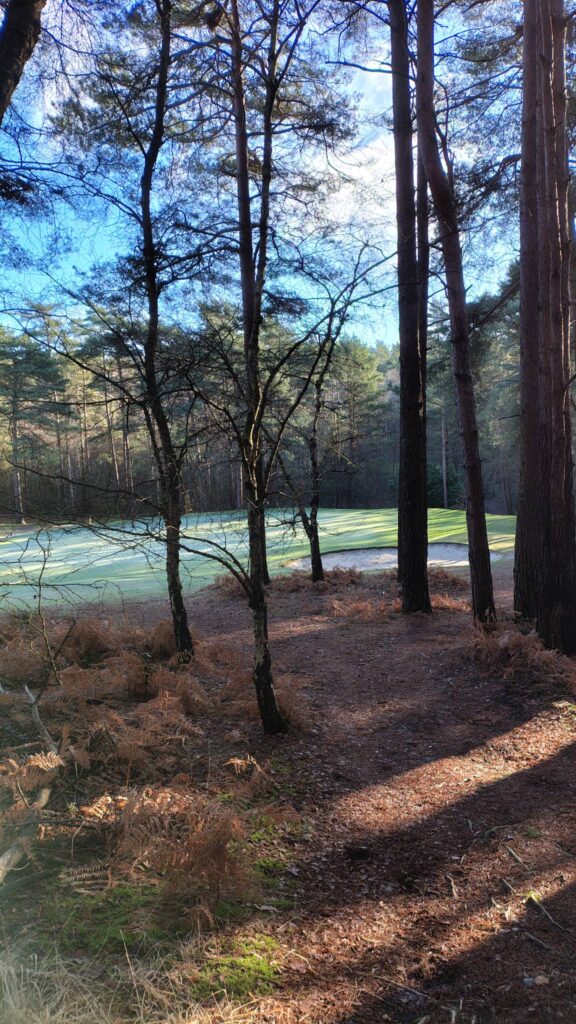
Imagine a peaceful stretch of Surrey woodland where families stroll marked trails, golfers tee off through towering pines, classic cars line up for a friendly breakfast meet, a backgammon club gathers every Tuesday evening for camaraderie and strategy, and now brand new padel courts bring fresh energy to the site. This is not some distant idyll. It is right here in Frimley, on land owned by the Frimley Fuel Allotments charity. But that could all change. Trustees of the centuries old charity are reportedly considering selling the land for development, possibly to make way for a new Frimley Park Hospital or housing. If it happens, Pine Ridge Golf Club, the vibrant, pay and play heart of this green space, would almost certainly close. For locals who have never picked up a club, for visiting golfers seeking an affordable round, and for the regulars who treat the place like a second home, the loss would be nothing short of devastating.
Background on the Frimley Fuel Allotments Charity
The Frimley Fuel Allotments charity dates back over 200 years to the 1826 Enclosure Act, when land was set aside specifically to provide fuel, firewood, and relief for the poor and needy of the parish. Today the charity still fulfils that social mission by generating income, largely through leasing part of its 262 acre woodland site to Pine Ridge Golf Club, and uses the funds to support local individuals and groups facing hardship. The site itself is a treasured green lung with attractive woodland walks, a pretty pond and clean stream, waymarked circular routes, and opportunities for longer rambles. It is not just allotments in the vegetable plot sense. It is precious open space that doubles as a Site of Alternative Natural Greenspace, helping protect nearby protected heathlands.

History of Pine Ridge Golf Club
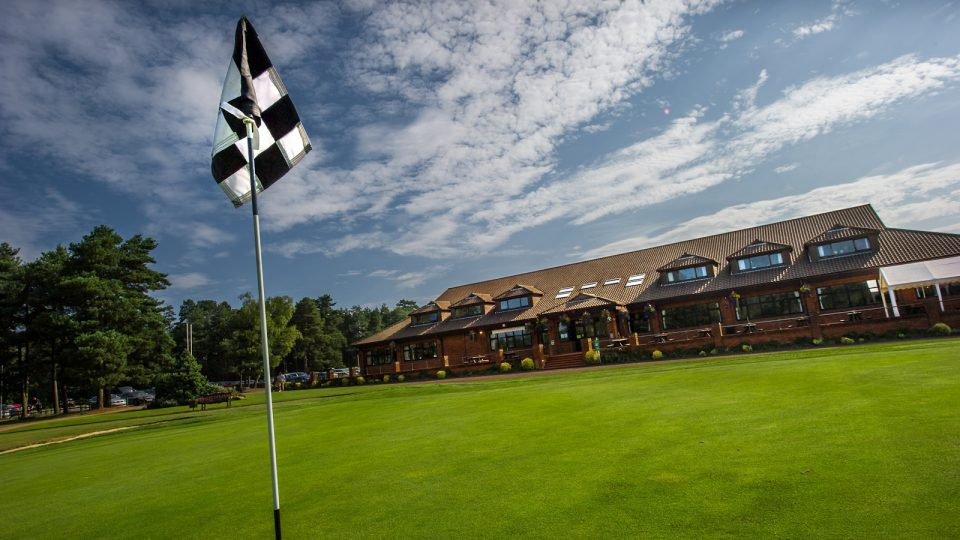
Pine Ridge Golf Club itself opened for play in 1992 and 1993. Local golfer and developer Clive Smith carved an 18 hole, par 72 course out of derelict virgin forest, creating a stunning 6,458 yard layout that winds through mature pine trees. It quickly earned a reputation as one of the country’s top public pay and play venues. In 2007 Crown Golf acquired the club and has operated it ever since as a welcoming, non membership facility. No stuffy dress codes or waiting lists. Just quality golf that anyone can book.
The Club Today: Busy, Diversifying, and Under Threat
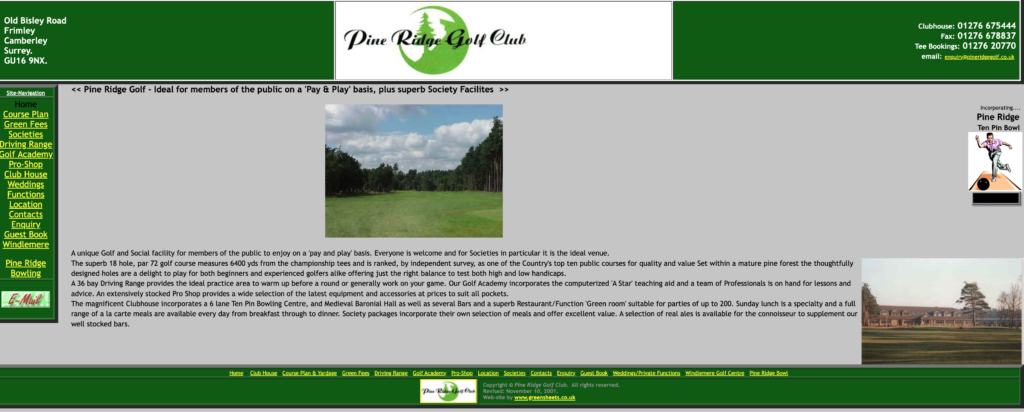
The club remains busy, popular, and a commercial success in a tough industry. It draws steady footfall from Surrey golfers and visitors alike, with green fees around the 55 pound mark and a floodlit, 36 bay Toptracer driving range that stays open late for practice sessions. Reviews consistently praise the natural layout, the challenge without excessive bunkering, and the friendly atmosphere. The place still ranks in the national top 10 public courses for good reason. It also features a well stocked pro shop, golf academy for lessons, a bar and sports bar for post round drinks, and facilities for weddings, events and parties. In short, it is far more than 18 holes. It is a genuine community hub.
Adding to its appeal, Pine Ridge will launch two brand new padel courts 2026. The addition brings a modern, fast growing racket sport to the site, attracting new visitors and families while broadening the club’s offer beyond traditional golf. It shows the venue actively evolving to stay relevant.
Important context for the current situation: the operating company, Crown Golf Operations Limited, entered creditors voluntary liquidation in October 2024. Despite this, the club continues to trade and serve the community while the land lease and future remain uncertain. The liquidation adds further urgency to protecting the site before any forced closure or sale disrupts everything.

Community Beyond Golf: Car Meets, Backgammon, and More
That community role goes well beyond golf. Every second Sunday of the month the large car park fills with gleaming classics, hot rods and American cars for the hugely popular Bagshot Breakfast Meet. Owners and enthusiasts turn up from across the region between 9am and 12pm, turning the venue into a free, family friendly car show that brings people together over coffee and conversation. The club’s welcoming stance, plenty of space for both cars and golfers, has made it the perfect neutral ground.

On most Tuesday evenings at 7pm, the Surrey Heath Backgammon Club meets in the clubhouse. Players of all ages and abilities gather for friendly competition, chat and a sense of belonging. It is exactly the sort of low key, inclusive activity that builds real social connections in an area where such spaces are increasingly rare.
The People Who Keep It Running
The people who work at Pine Ridge, greenkeepers, golf professionals, bar and events staff, academy coaches, and soon the padel team, form the backbone of the operation. They are the friendly faces who keep the course playable, run the range, organise events and make sure visitors feel at home. In an era when many clubs are cutting back, Pine Ridge still offers jobs and training in the local leisure sector.
The Broader Golf Industry Crisis
Zoom out to the bigger picture. Across the UK, golf clubs and courses are under enormous pressure. Recent industry analysis shows that one in six British golf clubs, roughly *433 venues, face potential closure because of soaring maintenance, insurance and energy costs. In the last seven years alone, more than **130 courses have been lost, while brand new builds remain rare, a handful in recent years, such as one near London and one in Basingstoke. Pay and play facilities like Pine Ridge are especially vital. They provide accessible golf without the barriers of expensive memberships, keeping the game open to families, beginners, visitors and casual players at a time when traditional clubs are struggling to retain members. Losing one in an affluent but green space hungry county like Surrey would be a body blow to the golfing community and to everyone who benefits from the wider recreational offer.
What We Stand to Lose
If the Frimley Fuel Allotments land is sold and Pine Ridge closes, we do not just lose a golf club. We lose:
- A top quality, affordable public course that thousands enjoy each year.
- A floodlit driving range that serves as a year round training ground.
- Brand new padel courts that are already drawing fresh crowds.
- A proven community venue hosting regular car meets, backgammon nights, weddings, corporate days and charity events.
- Jobs for local staff and income for the very charity that was set up to help those in need.
- Irreplaceable woodland walks, wildlife habitat and natural greenspace in an area already feeling the pinch from development.
Locals who walk the trails or use the site as a SANG might not realise how intertwined their daily strolls are with the golf operation that funds the charity. Visiting golfers from further afield who drop in for a relaxed round would lose one of Surrey’s best value venues. And the regulars, the early morning players, the car enthusiasts swapping stories over bacon rolls, the backgammon crew rolling dice, and the new padel players, would lose a place that feels like theirs.
Time to Act
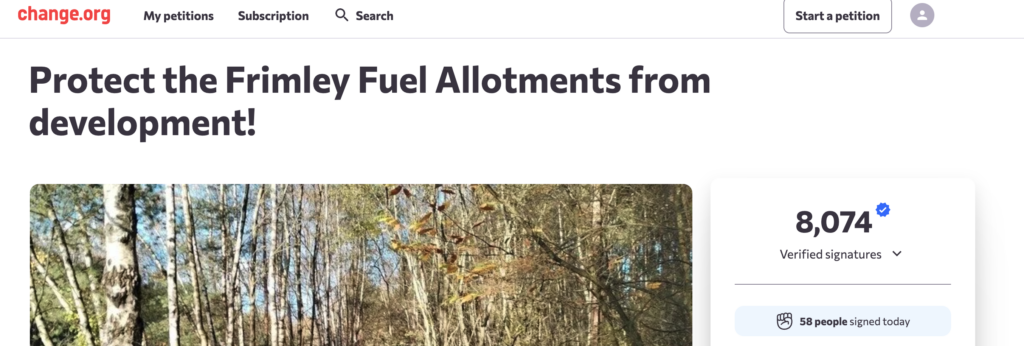
There is still time. A petition to protect the Frimley Fuel Allotments from development has already gathered strong local support, and campaigners are urging trustees to explore alternatives that keep the woodland, walks, golf club and new padel facilities intact while still meeting the charity’s objectives. The recent delay in Frimley Park Hospital plans gives us breathing space to find a solution that does not concrete over one of our most valued community assets.
Pine Ridge Golf Club is not just another course on a map. It is living proof that thoughtful development in the 1990s can create something that still delivers real social, economic and environmental value three decades later. For locals who have never stepped foot on the fairways, for the golfers who make it their regular haunt, and for everyone who values green space, good health and genuine community spirit, the message is simple. This place matters. Losing it would leave a hole in Frimley that no new housing or hospital extension could ever fill.
Sign the petition. Spread the word. Let us make sure Pine Ridge, and the Frimley Fuel Allotments woodland it helps sustain, stays open for generations to come. Our community is richer for it.
*This comes from a widely cited 2024 whitepaper titled Securing the Future of Golf: From Challenge to Opportunity, produced by industry experts at Custodian Golf. It analysed the financial health of Britain’s roughly 2,500 golf clubs and identified 433 clubs (approximately one in six) as being in such serious distress that they faced potential closure without urgent intervention. The main drivers cited were:
- Soaring maintenance costs (especially after extreme weather and inflation)
- Rising insurance premiums
- Higher energy and operational expenses
- Declining or unstable membership numbers in many clubs
By late 2025, some of the same experts updated the picture, suggesting the number of vulnerable clubs had risen closer to 500 (roughly one in five), as additional courses had already shut that weren’t even on the original “distressed” list. The pressure has only intensified with government housing targets pushing local authorities to consider golf land for development.
**Closures in the last seven years (roughly 2019–2025/early 2026)
The often-quoted figure of more than 130 courses lost in seven years is a reasonable industry estimate drawn from aggregated data on permanent closures (full 18-hole courses, 9-hole layouts, and some driving-range-only sites). Exact numbers vary slightly depending on the source because some clubs merge, downsize, or are repurposed rather than fully “lost,” but the trend is clear and concerning.
Recent confirmed or announced closures include:
2025 examples:
- Gatley Golf Club (near Manchester) — closed to make way for housing
- North Oxford Golf Club (118-year history) — closed October 2025 for major housing development
- Maidenhead Golf Club (current site) — set to close end of 2025, land sold for 1,500 homes (club relocating)
- Caird Park Golf Course
- Sapey Golf Club
- Dinsdale Spa Golf Club (Darlington, 116-year history) — scheduled to close April 2026
2024 and earlier notable closures:
- Torrance Park Golf Club (Motherwell)
- Caddington Golf Club (Bedfordshire)
- Hirsel Golf Club (Scotland)
- Whitewebbs Park Golf Course (London/Enfield) — closed 2021, now earmarked for Tottenham Hotspur academy and parkland
- Moore Place Golf Club (Surrey, 93 years old) — closed 2019
- Laleham Golf Club (Surrey) — closed 2017 (just outside the 7-year window but often referenced)
Other closures in recent years: Bedford Golf Club, Brandon Wood, Brandhall, Silsden, South Leeds, Stanmore & Edgware, Carswell, Mount Ellen, Eastwood, Brunston Castle, and several municipal courses in Glasgow (Linn Park, Alexandra Park, Ruchill).
In short, the 130+ lost in seven years is not exaggerated — it reflects a steady trickle that has continued even after the post-Covid participation boom. New course openings remain rare (examples include one near London and one in Basingstoke in 2024), so the net loss of facilities is real.
Why the numbers matter for places like Pine Ridge
Pay-and-play venues such as Pine Ridge are especially valuable right now. Traditional private clubs dominate the “at-risk” list, but public-access courses help keep golf open to beginners, families, visitors, and casual players. Losing accessible sites in high-demand areas like Surrey accelerates the decline and reduces overall participation.
The broader context is a “perfect storm”: rising costs + membership challenges + housing development pressure. That is exactly why protecting thriving, diversified sites (golf + driving range + padel + community events) is so important — they are the ones still delivering social and recreational value while many others struggle.
If you’d like me to update the Pine Ridge article with a more precise or expanded version of this section (for example, naming a few local Surrey examples or tweaking the wording for tone), just let me know. The core point stands: the industry is losing courses faster than it is building them, making the survival of well-used community assets like Pine Ridge even more critical.




Leave a Reply